General Tips on How to Analyze Your Website
Learn how to analyze your website’s SEO, technical performance, content, traffic, user experience and conversions. This practical guide also explains how to prepare your content for traditional search engines, answer engines and AI-powered search experiences.
How Do You Analyze a Website?
To analyze a website, review its search visibility, traffic, technical SEO, page speed, mobile usability, content quality, backlinks, user experience and conversions. Compare the findings with your business goals and competitors, then prioritize the improvements that can have the greatest impact on visibility, usability and conversions.
What Is Website Analysis?
Website analysis is the process of evaluating a website’s performance, search visibility, technical health, content, usability and conversion performance. The purpose is to identify problems, understand opportunities and determine which changes can improve the website’s results.
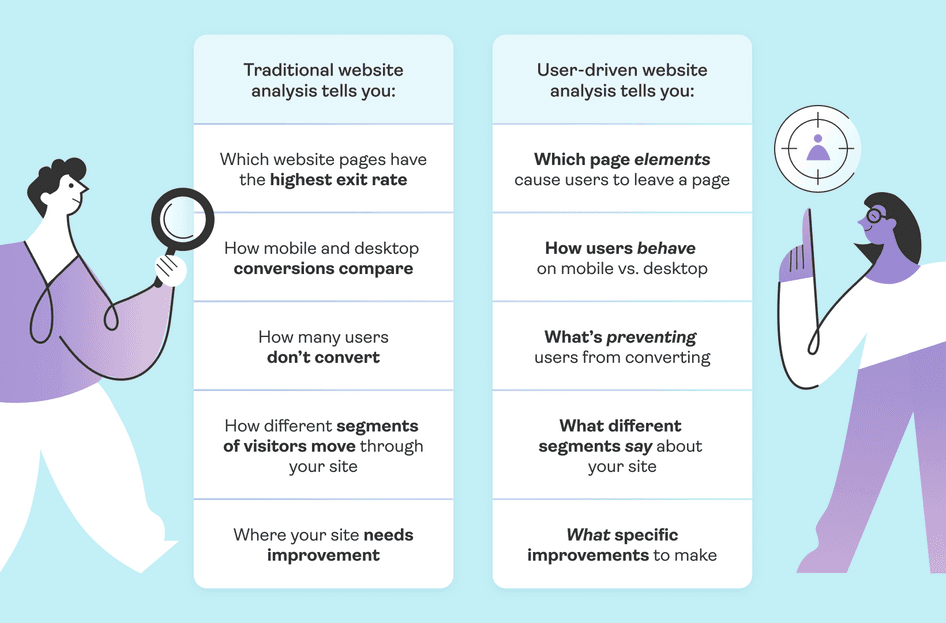
A useful website analysis combines search data, analytics, technical checks, content evaluation and user behavior instead of relying on a single metric.
SEO
Evaluate search visibility, keywords, titles, headings, internal links and search intent.
Technical Health
Check crawling, indexing, redirects, canonical URLs, sitemaps and website accessibility.
Traffic
Understand where visitors come from and which pages attract and engage users.
Performance
Review loading speed, mobile performance and Core Web Vitals.
Content
Evaluate accuracy, relevance, usefulness, clarity and topical completeness.
Conversions
Measure whether visitors become leads, enquiries, customers, subscribers or bookings.
Define Your Website Goals
Start by identifying what your website should accomplish. Your objectives might include increasing organic traffic, generating enquiries, receiving phone calls, selling products, getting bookings or building brand awareness.
Clear goals help you choose meaningful metrics and prevent you from measuring performance using numbers that have little connection to your business objectives.
Analyze Your Website Traffic
Website traffic analysis shows how people discover your website and what they do after arriving. Review traffic from organic search, direct visits, referrals, social networks and other acquisition channels.
Useful traffic metrics include:
- Users and sessions
- Organic search traffic
- Top landing pages
- Traffic sources
- User engagement
- New and returning visitors
- Conversion performance
Perform an SEO Analysis
SEO analysis evaluates how well your pages communicate their topics to users and search engines. Each important page should satisfy a clear search intent and provide useful, relevant information.
Check these on-page SEO elements:
- SEO title and page title
- Meta description
- One clear primary H1 heading
- Logical H2 and H3 headings
- Readable and descriptive URLs
- Internal links to relevant pages
- Descriptive image alt text
- Content that matches search intent
Check Technical SEO
Technical SEO helps search engines crawl, process and index your website correctly. Strong content may still struggle in search if important pages cannot be accessed or interpreted.
- Confirm important pages can be indexed
- Check XML sitemap configuration
- Review robots.txt directives
- Find and repair broken links
- Review 301 redirects
- Check canonical URLs
- Use HTTPS throughout the website
- Look for duplicate or unnecessary URLs
- Check mobile accessibility
Analyze Website Speed and Core Web Vitals
Website performance affects user experience. Test important landing pages on both mobile and desktop devices and look for resources that unnecessarily delay loading or interaction.
Review these Core Web Vitals:
- Largest Contentful Paint (LCP): loading performance.
- Interaction to Next Paint (INP): responsiveness to user interaction.
- Cumulative Layout Shift (CLS): visual stability while the page loads.
Common performance problems include oversized images, excessive JavaScript, unnecessary plugins, slow hosting and heavy third-party scripts.
Evaluate Your Content Quality
Good content should solve a problem, answer a question or help visitors complete a task. Review important pages for accuracy, relevance, originality, usefulness and clarity.
Ask these questions about each page:
- Does the page directly answer the user’s main question?
- Is the information accurate and current?
- Does it provide enough context to be genuinely useful?
- Are important claims supported where appropriate?
- Does it include relevant internal links?
- Is the content easy to scan on mobile devices?
- Is the author or organization clearly identifiable?
Analyze Keywords and Search Queries
Keyword analysis helps you understand what people are searching for and which queries are already generating impressions, clicks and website visitors.
Do not focus only on broad, high-volume keywords. Long-tail searches and question-based queries can reveal stronger user intent and can also support answer-engine and AI-search visibility.
Relevant keyword examples for this topic:
- how to analyze your website
- website analysis
- website SEO analysis
- website performance analysis
- how to audit a website
- website analysis checklist
- SEO audit tips
- GEO optimization
- AEO optimization
Review User Experience and Mobile Usability
A website should be easy to understand and use on mobile, tablet and desktop devices. Visitors should quickly know what the page is about and how to complete their intended action.
- Test navigation and menus
- Check font size and readability
- Review buttons and touch targets
- Test forms on mobile devices
- Make important calls to action easy to find
- Remove unnecessary popups or distractions
- Keep layouts visually stable
Measure Website Conversions
Traffic alone does not tell you whether a website is successful. Conversion analysis measures whether visitors complete the actions that matter to your business.
Examples of website conversions include:
- Contact-form submissions
- Phone calls
- WhatsApp or chat enquiries
- Product purchases
- Bookings or reservations
- Newsletter registrations
- Quote requests
- Account registrations
Analyze Your Backlink Profile
Backlinks are links from other websites to your pages. Relevant links from trustworthy sources can support discovery, credibility and organic search performance.
Review which domains link to you, which pages attract the strongest links and whether competitors have earned relevant links that your website has not yet earned.
Analyze Your Competitors
Competitor research can reveal content gaps, keyword opportunities, backlink opportunities and different ways competitors satisfy user intent.
- Compare search-visible pages
- Review their topic coverage
- Identify content gaps
- Compare internal linking structures
- Review backlink sources
- Compare page usability and calls to action
Use competitor research for insight rather than copying. Your goal should be to provide a more useful experience.
How to Optimize Website Content for SEO, GEO and AEO
Modern website optimization involves more than traditional rankings. Content should be helpful to people while also being easy for search engines, answer engines and generative AI systems to interpret.
SEO
Search Engine Optimization helps search engines discover, crawl, understand and rank relevant pages in organic search results.
AEO
Answer Engine Optimization makes information easier for search and answer systems to identify as a clear response to a user’s question.
GEO
Generative Engine Optimization makes content clearer, more contextual and more useful to AI-powered search and generative systems.
How to Improve AEO
- Use descriptive question-based headings.
- Answer the question directly after the heading.
- Write clear definitions for important concepts.
- Use lists and tables when they improve comprehension.
- Keep important information available as crawlable HTML.
- Use logical H2 and H3 heading structures.
How to Improve GEO
- Clearly identify the main topic and related entities.
- Provide specific, factual and useful information.
- Cover important related questions and subtopics.
- Support important claims with reliable sources.
- Use consistent terminology throughout the page.
- Show authorship and organizational expertise when relevant.
- Keep information updated when facts change.
- Use contextual internal links between related topics.
Website Analysis Checklist
| Area | What to Check | Main Question |
|---|---|---|
| SEO | Keywords, titles, headings and internal links | Can search engines understand the page topic? |
| Technical SEO | Crawling, indexing, canonicals and redirects | Can search engines access important pages? |
| Traffic | Visitors, channels and landing pages | How are people discovering the website? |
| Speed | Page performance and Core Web Vitals | Does the website load and respond quickly? |
| Content | Accuracy, relevance and completeness | Does the page satisfy user intent? |
| User Experience | Navigation, mobile usability and readability | Can users easily complete their task? |
| Conversions | Calls, forms, sales, leads or bookings | Does traffic generate business results? |
| Authority | Links, sources, expertise and reputation | Why should users trust this information? |
| AEO | Direct answers and question-based sections | Can an answer system extract a useful answer? |
| GEO | Entities, context, facts and topical coverage | Can AI systems understand the subject clearly? |
Frequently Asked Questions About Website Analysis
What is website analysis?
Website analysis is the process of evaluating a website’s SEO, technical health, traffic, content, performance, user experience and conversions to identify opportunities for improvement.
How do I analyze my website for SEO?
Review indexing, organic traffic, search queries, titles, headings, content quality, internal links, backlinks, page speed and technical SEO issues. Prioritize improvements according to their potential impact.
What are the most important website analysis metrics?
Useful metrics include organic traffic, search impressions, clicks, conversions, landing-page performance, engagement, Core Web Vitals, indexed pages and relevant backlinks.
How often should I analyze my website?
Important performance metrics can be monitored regularly. A deeper audit is useful periodically and after major redesigns, migrations, technical changes or significant content updates.
What is the difference between SEO, GEO and AEO?
SEO focuses on organic search visibility. AEO focuses on structuring information so answer engines can identify clear responses. GEO focuses on making content understandable, contextual and useful to generative AI-powered systems.
Can website analysis improve conversions?
Yes. Website analysis can reveal problems with page speed, navigation, content, forms, calls to action and landing pages. Correcting these issues can make it easier for visitors to complete important actions.
Final Thoughts
A complete website analysis should combine SEO, technical performance, traffic, content quality, user experience, backlinks and conversion data. Instead of making changes based on assumptions, use measurable evidence to determine what needs improvement.
For modern search visibility, combine traditional SEO with direct answers, strong topic coverage, clear entity information, useful internal linking and trustworthy supporting information. This creates content that is useful to visitors while also being easier for search engines, answer engines and AI-powered systems to understand.
Need Help Improving Your Website?
Explore website development, SEO and digital optimization solutions from Obeysoft.
Visit Obeysoft